
29 July 2026 · 9 min read
Retatrutide and Alcohol: Why Two Drinks May Not Affect Research Subjects the Same Way on Reta
Retatrutide is one of the most talked-about compounds in metabolic research right now, and for good reason. As a GIP/GLP-1/glucagon triple agonist, it influences appetite, glucose metabolism, energy expenditure and gastric function through multiple receptor pathways at once.
But that multi-receptor activity also means researchers have to think carefully about what happens when retatrutide is studied alongside other substances that affect the same systems.
Alcohol is one of the most common examples.
It is easy to assume that a drink is just a drink. In practice, alcohol is a metabolic active compound in its own right. It affects the liver, pancreas, gut, blood glucose and the hormones that regulate all of them. When those effects overlap with retatrutide's pharmacology, the interaction is not necessarily simple or predictable.
Why alcohol is not metabolically neutral
When a research subject consumes alcohol, the body prioritises clearing it. The liver converts ethanol to acetaldehyde, then to acetate, using enzymes including alcohol dehydrogenase and acetaldehyde dehydrogenase.
That process has several consequences:
- The liver temporarily reduces glucose output, which can lower blood glucose.
- Acetate becomes a fuel source, potentially altering substrate utilisation.
- Alcohol can irritate gastric mucosa and affect gastric emptying.
- It influences insulin secretion and glucagon release.
- It affects sleep, hydration and recovery, which all feed back into metabolic regulation.
None of these effects are unique to retatrutide research. But they become especially relevant when the study compound is also designed to modify glucose regulation, gastric motility and hormonal signalling.
Where retatrutide and alcohol overlap
Retatrutide activates three receptors:
- GLP-1
- GIP
- Glucagon
Each of these has known interactions with alcohol physiology.
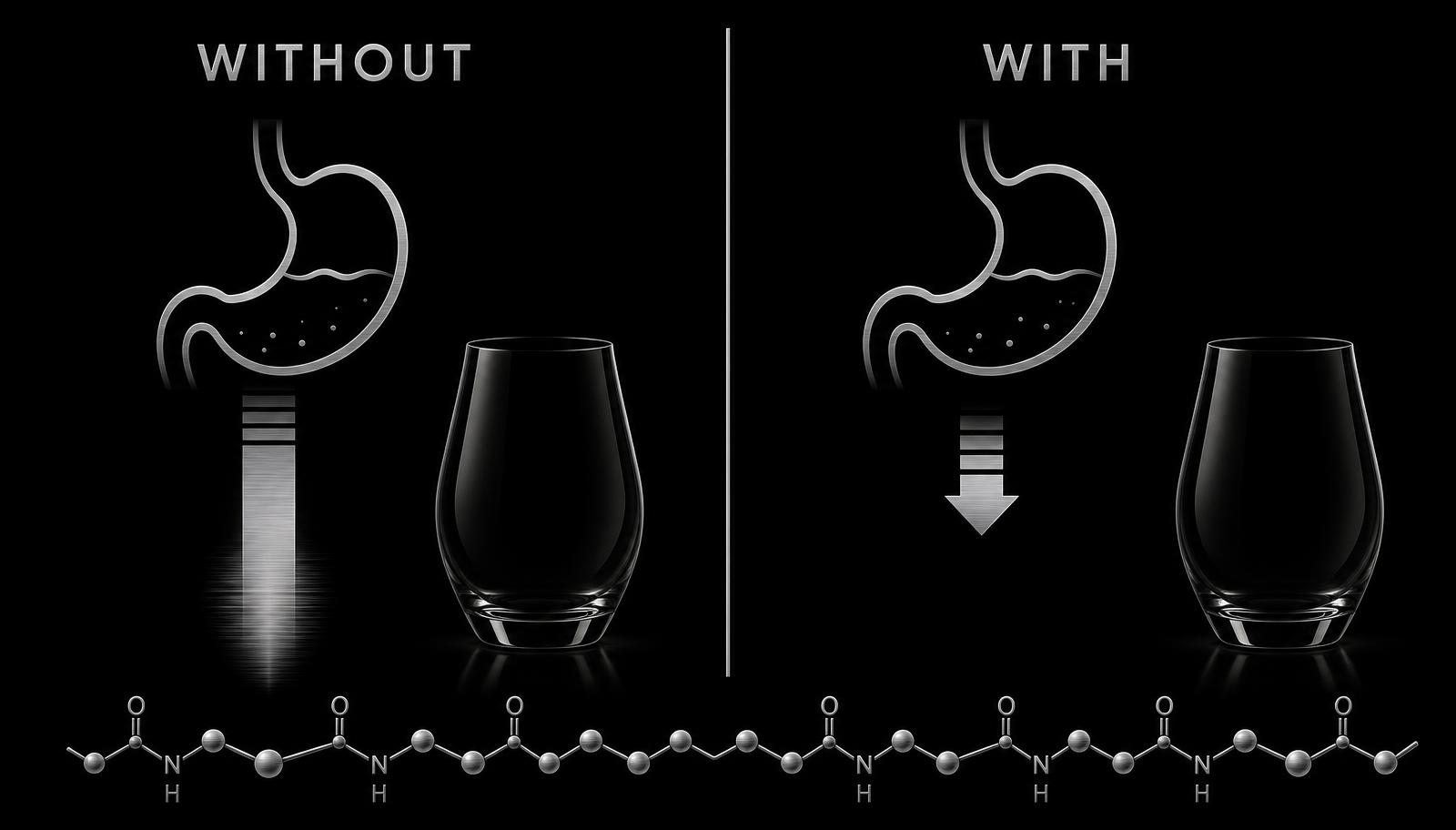
GLP-1 receptor agonists slow gastric emptying and suppress appetite. Alcohol is absorbed partly in the stomach and partly in the small intestine, so changes in gastric motility can alter how quickly and how intensely blood alcohol rises.
GIP signalling is involved in insulin secretion in response to nutrients. Alcohol can blunt or distort that response, particularly in the setting of mixed drinks containing sugar.
Glucagon raises blood glucose by stimulating hepatic glucose output. Retatrutide includes glucagon receptor agonism, which means the compound is actively engaged in glucose counter-regulation. Alcohol, meanwhile, suppresses hepatic gluconeogenesis and can increase the risk of hypoglycaemia in susceptible individuals.
The result is that retatrutide and alcohol are not acting on separate systems. They are both modulating overlapping metabolic pathways at the same time.
Why "two drinks" is not a fixed unit of exposure
The phrase "two drinks" sounds standard. It is not.
A standard drink varies by country. The alcohol content of wine, beer and spirits differs. Glass sizes differ. Mixers differ. Whether the subject has eaten recently matters. Body composition matters. Liver enzyme genetics matter. Hydration matters. Sleep matters.
Then add retatrutide.
A subject on a lower retatrutide dose may experience different gastric emptying, appetite and glucose effects than a subject on a higher dose. Someone in the early titration phase may not have the same tolerance or metabolic response as someone who has been on a stable dose for months.
That is why two drinks may not affect two research subjects the same way, even if both are described as light-to-moderate alcohol exposure.
The glucose question is particularly important
One of the most clinically relevant overlaps between alcohol and retatrutide is glucose regulation.
Alcohol can lower blood glucose by suppressing hepatic glucose production. GLP-1 receptor agonists also lower glucose through multiple mechanisms. Retatrutide's glucagon component provides some counter-regulatory activity, but the net effect in any given subject depends on dose, timing, food intake and baseline metabolic health.
For researchers, this means glucose monitoring becomes more important, not less, when alcohol is part of the experimental context. A subject who looks metabolically stable in one condition may look quite different after even modest alcohol intake.
Gastric effects add another layer
GLP-1 agonists are well known for slowing gastric emptying. That is part of how they reduce appetite and blunt post-meal glucose spikes.
Alcohol, especially in higher concentrations or on an empty stomach, can irritate the gastric lining and alter motility. The combination of slowed gastric emptying from retatrutide and the direct irritant effects of alcohol may produce more pronounced nausea, fullness or gastrointestinal discomfort in some subjects than either factor alone.
Again, this is not a fixed outcome. It is a variable that depends on dose, timing, formulation and individual susceptibility.
What the research actually tells us
As of August 2026, there is no large published study specifically evaluating retatrutide-alcohol co-administration in humans. Most of what researchers know comes from:
- The known pharmacology of GLP-1, GIP and glucagon receptor agonism
- General literature on alcohol and glucose metabolism
- Studies of other GLP-1-based compounds and alcohol
- Preclinical and early-phase retatrutide data that did not focus on alcohol
That means a lot of the online discussion is inference, not direct evidence. Researchers should be cautious about extrapolating from semaglutide or tirzepatide studies and assuming the same patterns apply to retatrutide, because the glucagon component changes the metabolic equation.
Why individual variation matters more than blanket rules
It is tempting to look for a simple rule:
"Avoid alcohol entirely." "Limit to one drink." "Only on weekends."
But in a research context, the more useful question is not "what is the rule?" but "what variables are changing the outcome?"
Those variables include:
- Retatrutide dose and duration of exposure
- Subject body composition and liver function
- Timing of alcohol relative to meals and dosing
- Type and quantity of alcohol
- Concurrent medications or supplements
- Baseline metabolic health
- Genetic variation in alcohol metabolism
Until there are dedicated interaction studies, the honest scientific position is that the effect of alcohol during retatrutide exposure is underdetermined and likely highly individual.
What responsible research design looks like
For researchers studying retatrutide, alcohol exposure should be treated as a confounding variable unless it is deliberately controlled.
That means:
- Documenting alcohol intake in subject diaries or questionnaires
- Standardising timing relative to retatrutide dosing where possible
- Monitoring glucose, heart rate, blood pressure and gastrointestinal symptoms
- Being cautious about interpreting metabolic outcomes in subjects with uncontrolled alcohol intake
- Avoiding assumptions based on other GLP-1 receptor agonists
The goal is not to moralise about alcohol. The goal is to protect the integrity of the data.
The Everkind perspective
At Everkind, we supply research peptides to scientists who need reliable material for controlled investigation. We do not provide dosing, lifestyle or medical advice, and we do not design study protocols.
But we do believe that good research starts with honest information.
Retatrutide is a powerful and interesting compound precisely because it acts on multiple metabolic pathways. That same feature makes it harder to predict how it will interact with other metabolic stressors, including alcohol.
The responsible position is not to pretend the interaction does not exist. It is to acknowledge the uncertainty, control the variables, and wait for better evidence.
Bottom line
Alcohol and retatrutide both influence glucose regulation, gastric function and metabolic signalling. When those effects overlap, the same drink can produce different outcomes in different subjects.
There is no clean universal rule yet because the dedicated research does not exist. Until it does, the safest scientific approach is to treat alcohol as a meaningful experimental variable, not a background detail.
Retatrutide is investigational. Alcohol is metabolically active. Together, they deserve more attention than either gets alone.
Disclaimer: This article is educational only and summarises published scientific literature. Compounds discussed remain investigational and are not approved for general therapeutic use in most jurisdictions. Nothing here is medical advice. Research use only.
Research use only. Not for human or veterinary use.